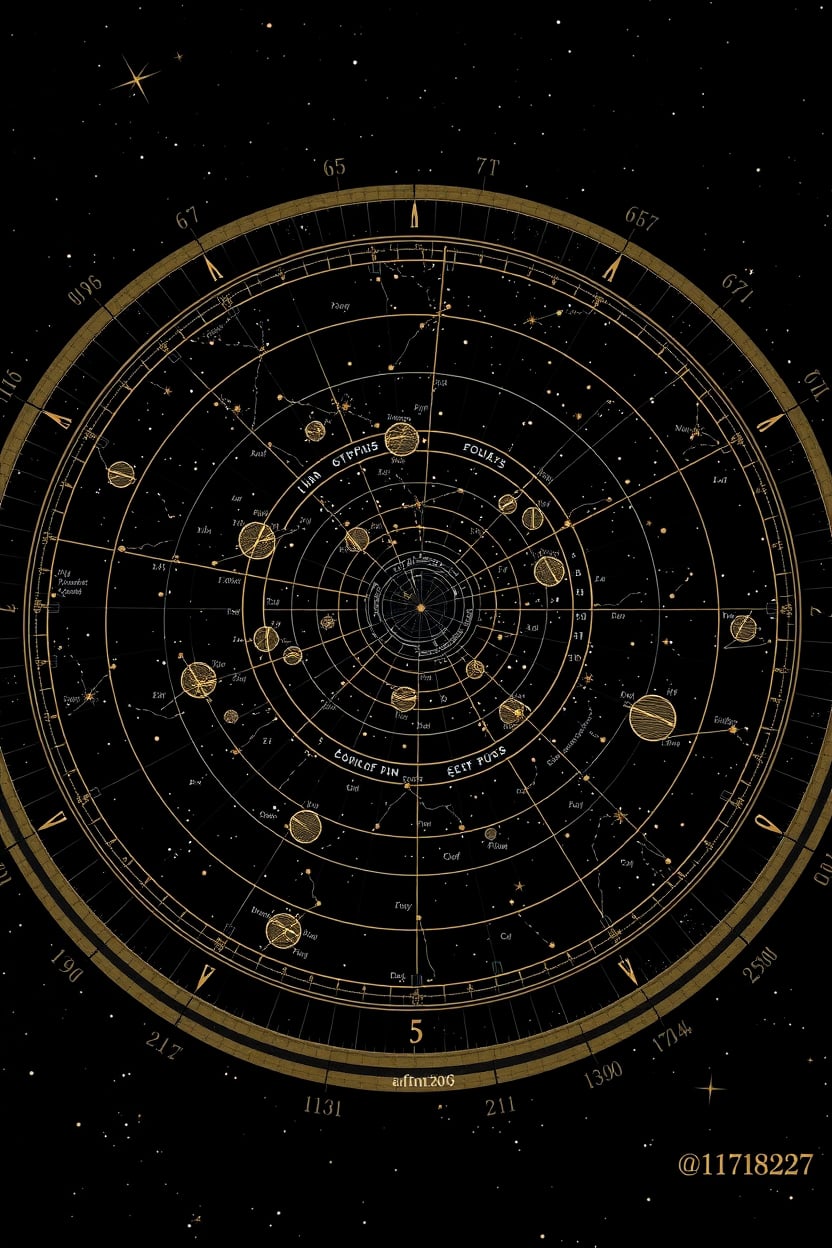
The historical roots of astrology are closely connected to early human observation of the sky. In many ancient societies, the movement of the Sun, Moon, and visible planets was carefully recorded to support practical needs such as agriculture, navigation, and timekeeping. Seasonal cycles, lunar phases, and planetary patterns were used to organise calendars and coordinate social and economic activities.
Over time, these observations became associated with symbolic interpretations. In regions such as Mesopotamia, Egypt, India, and China, celestial events were recorded alongside written commentary about their possible meaning within cultural or political contexts. Early records show that astrology developed as part of a broader system of knowledge that combined astronomy, mathematics, and religious or philosophical ideas.
At this stage, the distinction between astronomical measurement and symbolic interpretation was not clearly separated. The sky was viewed both as a physical system to be observed and as a structured pattern that could be interpreted through cultural frameworks.
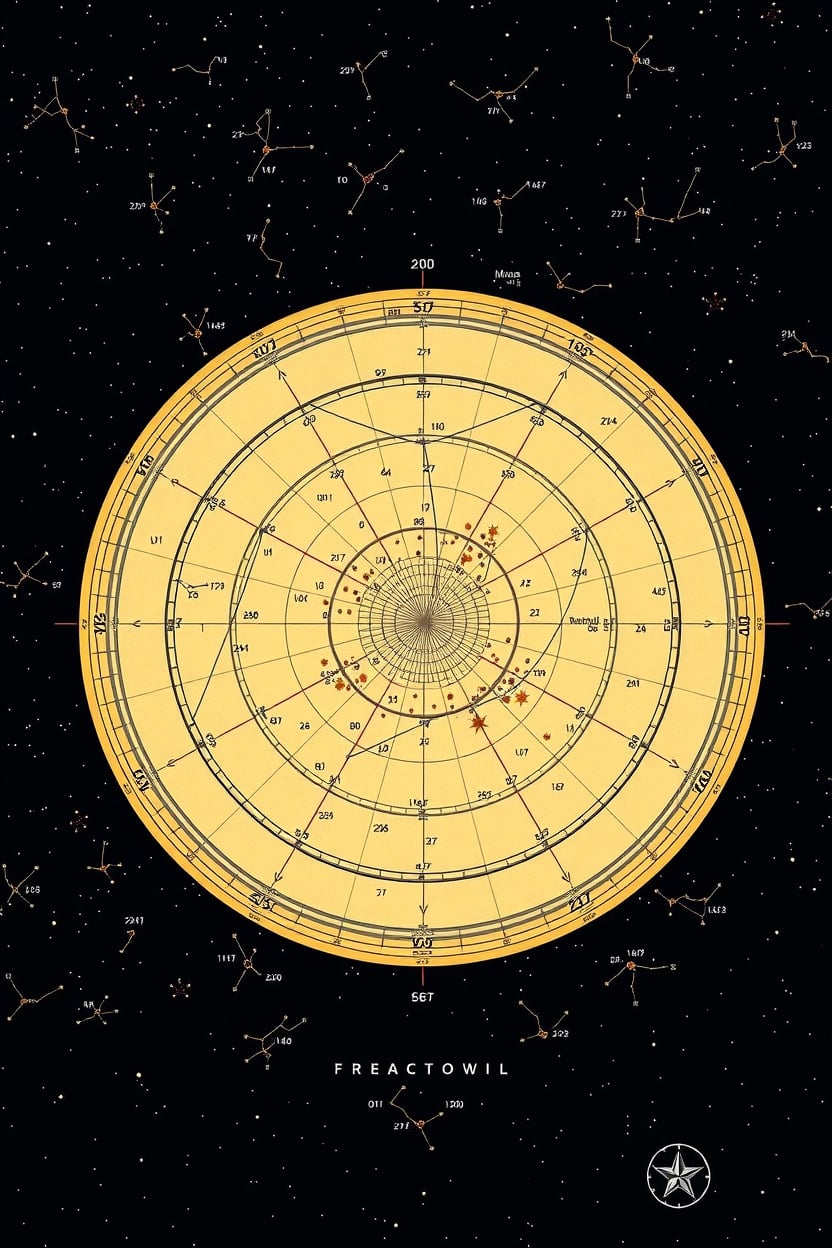
During the Hellenistic period (approximately 3rd century BCE to 3rd century CE), astrology became more structured and standardised. Knowledge from Mesopotamian star catalogues was combined with Greek mathematical and philosophical approaches. This period introduced many of the concepts that remain familiar today.
One of the most influential developments was the formalisation of the twelve-sign zodiac. The zodiac divided the sky into twelve equal segments associated with constellations such as Aries, Taurus, Gemini, Cancer, Leo, Virgo, Libra, Scorpio, Sagittarius, Capricorn, Aquarius, and Pisces. This framework allowed writers and scholars to organise interpretations using a consistent system.
Texts from the classical period describe chart-based methods and symbolic associations between celestial positions and thematic categories. These works were translated and transmitted across regions, contributing to the spread of a shared structure for horoscope writing.
During the medieval period, astrological knowledge was preserved and expanded through translation movements and scholarly exchange. Works were translated between Greek, Arabic, Latin, and other languages, allowing ideas to circulate across Europe, the Middle East, and parts of Asia.
In many intellectual centres, astrology was studied alongside astronomy, mathematics, and philosophy. Universities and scholarly institutions sometimes included astrological texts as part of broader scientific education. At the same time, debates emerged regarding the limits of interpretation and the risk of overstating certainty.
Historical records show a wide range of perspectives. Some scholars viewed astrology as a system for identifying general patterns or symbolic relationships, while others questioned its reliability. These discussions contributed to the gradual separation of astronomy as an observational science and astrology as a symbolic or interpretive tradition.
With the development of printing technology in Europe, astrology became more widely accessible to the general public. Almanacs and printed calendars often included astrological content alongside practical information such as weather patterns, agricultural timing, and notable dates.
During the early modern period, astrology began to shift from a primarily scholarly subject to a popular cultural format. Short summaries and sign-based interpretations became more common, allowing readers to quickly access general information linked to their zodiac sign.
At the same time, the scientific revolution led to further distinction between astronomy as a scientific discipline and astrology as a symbolic or cultural practice. This shift influenced how astrology was viewed and used in different social contexts.
Zodiacal provides general informational content about horoscope 2026, tarot 2026, and personal horoscope formats. The information is presented for educational and reference purposes only and is not intended as professional advice or decision guidance.
© 2026 Zodiacal. All rights reserved.
This website uses only strictly necessary cookies that are essential for basic functionality, security, and proper operation of the website.
These cookies are not intended for direct identification, and this message is provided for informational purposes only.
No cookies are used for analytics, tracking, profiling, or advertising purposes.
Personal data is not collected, sold, or shared with third parties through cookies, in accordance with applicable data protection laws.